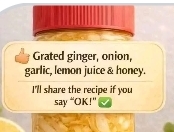
Prep Time: 25 minutesActive Daily Maintenance: 1–2 minutes per day (first 14 days)Initial Fermentation Window: 14–21 daysFull Maturation Time: 30–60 daysYield: Approximately 1 quart (32 fl oz / 950 ml)Skill Intensity: Beginner–Intermediate (Level 2/5 – Simple assembly, but requires diligent jar burping, pH monitoring, and hygiene)Flavor Intensity: High (Sharp, allium-heavy bite that mellows into a complex, sweet-savory, citrus-spiced syrup)Ferment Activity Intensity: Moderate (Mild bubbling and gas production; honey thins out into an almost maple-syrup consistency)Storage Temperature: Ambient room temperature ($18^\circ\text{C}–22^\circ\text{C}$ / $65^\circ\text{F}–72^\circ\text{F}$) away from direct sunlightEquipment Needed1-quart (32 oz / ~1 liter) wide-mouth glass Mason jar (thoroughly sanitized and bone-dry)Airtight 2-piece lid or fermentation lid with a silicone one-way airlock valveSmall glass fermentation weight (optional, but helpful to keep aromatics submerged)Chef’s knife and non-porous cutting boardClean wooden or silicone spoon (avoid unvarnished metal reactive utensils)Digital pH test strips or calibrated digital pH meterSmall rimmed plate or dish (to set the jar on in case of minor bubbling over)IngredientsRaw, Unpasteurized Honey: 1.5 to 2 cups (approx. 500g–650g)Crucial note: Use only raw, unfiltered honey. Commercial pasteurized honey has had its beneficial wild microbes, native yeasts, and enzymes destroyed by heat, which will prevent a natural ferment.Fresh Garlic: 1 large head (approx. 10–12 plump cloves), peeled and lightly bruised with the flat side of a knifeRed or Yellow Onion: 1/2 medium onion (approx. 100g), peeled and sliced into thin half-moonsFresh Ginger Root: 2-inch knob (approx. 40g), washed thoroughly, unpeeled if organic, and cut into thin matchsticks or coinsOrganic Fresh Lemon: 1 medium (organic preferred to avoid pesticide waxes on the rind), scrubbed, seeds removed, and sliced into thin rounds or quarter-wheelsRaw Apple Cider Vinegar (with “the mother”): 1 to 2 tablespoons (15–30 ml), optional safety buffer to acidify the honey below 4.6 pH immediatelyStep-by-Step Instructions1. Sterilize and Dry EquipmentEnsure your quart jar, lid, and utensils are washed with hot, soapy water and thoroughly dried. Any excess water introduced from the jar or utensils can alter water activity unpredictably, so work with completely dry equipment.2. Prepare the AromaticsGarlic: Peel the cloves and discard papery skins. Lightly crush each clove with the flat side of your chef’s knife just enough to fracture the surface without mashing them. This releases alliin and the enzyme allinase, combining them to create potent allicin. Allow the crushed cloves to rest on the cutting board for 10 minutes before jarring.Onion: Slice into uniform, thin half-moons.Ginger: Scrub clean, dry completely, and cut into thin coins or matchsticks.Lemon: Slice thinly. Meticulously pick out and discard all seeds, as they impart an astringent, bitter flavor if left to steep.3. Layer the JarLayer the aromatics alternately into the clean glass jar: a layer of garlic, a layer of ginger, a layer of onion, and slices of lemon tucked along the sides and center. Pack the jar loosely, leaving at least 2 inches of headspace at the top. Leaving sufficient headspace is vital, as the aromatics release juice and the honey bubbles as carbon dioxide builds up.4. Submerge in Raw HoneySlowly pour the raw honey over the layered ingredients. Use a chopstick or silicone spoon to gently prod down the sides, dislodging trapped air pockets so honey fills every void. Continue pouring until all ingredients are completely covered by at least 1/2 inch of honey, keeping at least 1.5 inches of headspace below the rim. If using apple cider vinegar as an acidifier, drizzle it in now.5. Secure the Lid & InvertWipe the jar rim clean with a dry paper towel. Screw on the lid securely. Gently tilt and invert the jar back and forth a few times so the thick honey coats every piece of garlic, lemon, ginger, and onion thoroughly.6. The Active Fermentation Phase (Days 1–14)Store: Place the jar on a small plate (to catch any rare drips) in a dark cupboard or pantry at room temperature ($18^\circ\text{C}–22^\circ\text{C}$ / $65^\circ\text{F}–72^\circ\text{F}$).Burp Daily: During the first 7 to 14 days, active fermentation produces carbon dioxide. Once every 24 hours, loosen the lid slowly until you hear a hiss of escaping gas, then tighten it back down.Flip Daily: Turn the jar upside down for a few hours (or briefly invert it twice a day) so the floating aromatics stay re-coated in honey. This prevents any exposed dry surfaces from developing surface mold.Consistency Change: By days 3–5, you will notice tiny bubbles forming around the garlic and ginger, and the honey will transform from thick and viscous into a thin, runny syrup.7. Maturation & Testing (Days
Fermented Garlic, Onion, Ginger, and Lemon in Honey